
1
Pre vetted clinics & surgeons
We audit accreditation, credentials, patient reviews and on-site facility inspections so you only compare clinics worth your trust.
Get approximate cost for Ventricular Septal Defect (VSD) Treatment Abroad

What is a VSD or Ventricular Septal Defect?
A VSD is a defect in the wall between the two lower chambers (ventricles) of the heart.
Why would someone need to have Ventricular Septal Defect (VSD) Treatment?
VSD closure is important to prevent complications and damage to the heart and lungs.
What conditions can a Ventricular Septal Defect (VSD) Treatment treat?
VSD closure treats symptoms like Shortness of breath, fatigue, respiratory infections, heart inflammation, and other complicated symptoms arising due to ventricular septal defect.
Share a few details and receive a personalized quote from our medical coordinators within 24 hours no obligation.
Requirements & Evaluation: Ventricular Septal Defect (VSD) Treatment
The diagnosis of VSD is established based on symptoms, a physical exam, and imaging tests. During the physical examination, the doctor may discover VSD by heart murmur. When the VSD defect size is large, it causes a heart murmur.
Imaging to diagnose VSD is an echocardiogram, electrocardiogram, chest X-ray, CT scan and cardiac catheterization:
|
Size of VSD |
Measurement |
Effect |
|---|---|---|
|
Small |
3 mm or less |
No symptoms. The defect closes on its own. |
|
Moderate |
3-5 mm |
No symptoms. Surgery is deleted because the defect may close without surgery. |
|
Large |
6-10 mm |
Surgery should be done before 2 years to prevent damage to the heart and lungs. |
Different Types of VSD Closure
Surgery: The objective of the surgical approach is to close the ventricular septal defect by patching it surgically. A patch of synthetic material or graft of own tissue can be used by the surgeon to close the defect.
Transcatheter procedures: In this procedure, a Catheter device is used made of a mesh framework which is covered in a synthetic material.
Procedure
Before the Procedure
The doctor performs a physical examination and advice following investigations.
ECG
Chest X-ray
Blood tests to determine general health
Echocardiogram for heart anatomy and blood flow.
VSD closure is advisable within 3-6 months of age.
After the Procedure
The healthcare team supports parents in taking care of the child. Follow-up appointments are scheduled.
What kind of follow-up care will I have during recovery?
To take regular follow-ups
To take prescribed medicines on time
Good nutrition.
To maintain good oral hygiene
Antibiotic prophylaxis
Risk & Benefits
What are the possible risks or complications of Ventricular Septal Defect (VSD) Treatment?
VSD closure is a safe procedure. VSD surgery reduces complications of lung problems, heart failure, arrhythmias, heart valve problems, and poor growth and development.
Recovery
How long will it take to return to normal life after Ventricular Septal Defect (VSD) Treatment?
It may take a few weeks for your child to resume a normal routine. Initially, the child may feel tired but with time the symptoms will improve.
A pediatric cardiologist will schedule a follow-up to monitor treatment success and assess complications, if any. Medications are evaluated. Additional investigations may be prescribed.
In the long term, outcomes achieved by VSD closure are excellent. No medicines are required. The patient has a completely normal life without restrictions and complications after VSD surgery.
The team of cardiac surgeons at Yapita Health are pioneers in performing VSD closer using the latest tools and techniques. We have achieved the highest success rates in all the treatments related to cardiac surgery like ASD closure, VSD closure and congenital heart disease treatment. The quality and affordability of our treatment packages have made healthcare accessible to all.
Hundreds of clinics across 20+ countries. One coordinator who narrows it down to the right two or three, transparently, and runs the whole trip for you.
We audit accreditation, credentials, patient reviews and on-site facility inspections so you only compare clinics worth your trust.
Detailed cost breakdowns with no hidden fees, plus preferential partner rates typically 10–15% below booking directly.
Visa guidance, flights, airport pickup, hotel, clinic coordination and 12 month post-op check-ins managed by one dedicated coordinator.
Share a few details and a Yapita Health coordinator will send you a vetted clinic shortlist and personalized quote within 24 hours.
Common questions about Ventricular Septal Defect (VSD) Treatment, answered by our care team.
Delaying VSD closure surgery is not advisable because it results in poor growth, developmental delay, and even permanent damage to the lung arteries.
VSD larger in size, 6-10 mm in diameter require surgery and it is advisable to do surgery before 2 years of age to reduce the risk of damage to the heart and lungs
It is generally a safe procedure. Safety is usually determined by age and weight.
The repair will take about 2-5 hours.
The average hospital stay after VSD closure is 5-7 days.
At Yapita Health, the success rates for VSD closure performed by expert Cardiologists are higher 90-95%.
After VSD closure, antibiotics are prescribed to prevent infections for a certain period of time.
No, not at all.. Medicines are given to prevent the formation of blood clots and infections. The long-term results are excellent.
It is advisable to discuss your history with your doctor. Large non-restrictive VSD may cause risk during pregnancy.
After VSD closure, life expectancy is enhanced
Expert guides and insights about Ventricular Septal Defect (VSD) Treatment to help you decide with confidence.
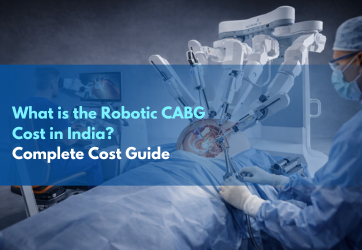
India is a leader in heart surgery with experienced cardiologists and heart surgeons, well-equipped hospitals and world-class heart centres. India offers minimal wait times, affordable packages and precision care, leaving behind Western countries in their medical offerings. Robotic CABG is a minimally invasive procedure that involves small cuts in the chest so that the surgeon can visualize the area to be treated and complete the surgery with precision. Read this article to know all about the robotic CABG cost in India.
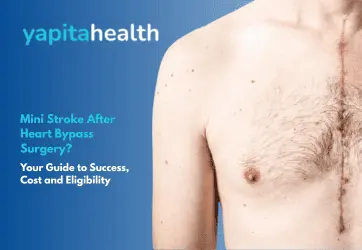
Coronary artery bypass grafting (CABG), commonly known as heart bypass surgery, is a life-saving procedure for patients with severe coronary artery disease. When arteries become clogged with plaque, restricting blood flow to the heart, CABG creates new pathways to restore proper circulation. The following sections explain how CABG works, who needs it, recovery expectations, risks, and alternatives - helping patients and families make informed decisions about this major cardiac surgery.
If you are looking for comprehensive cardiac surgery package in India, you would be one in thousands visiting for cardiac care. You can get access to state-of-the-art facilities and highly skilled doctors who treat you at fraction of the cost in Western countries. From travel, accommodation and world-class care, you can get the best of all in India. A global leader in cardiac care, India treats thousands annually with its advanced medical technology. The following sections will take you through the different aspects of cardiac surgery. We will also list different pediatric cardiac surgery hospital in India.
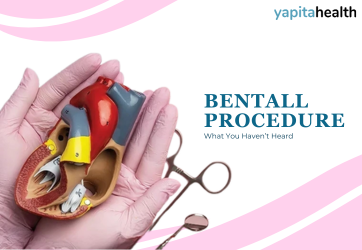
If you or your loved one has recently been recommended the Bentall procedure, you ve probably already dived head-first into it. Chances are, what you found did not satisfy the questions of long-term benefits you ll see. And if you ll see it. Your surgeon may not tell you the truth about recovery and long-term care in its entirety. Also, you can t hold them fully accountable with the amount of patients they tend to; so, think of us as their helpers! Answering every question about the Bentall procedure that you may not find at the clinic! The following section is for you to dive into.
.png)
Before we answer this for you, it s important that we first address the problem at hand. Why do arteries get blocked? There are many factors that contribute to it; here are a few to give you the idea. Primarily, plaque buildup (accumulation of fatty substance in the artery walls) leads to blocked arteries. So, when does the need for a surgery to fix this blockage arise? As you can imagine, only when the blockage is too high. When the buildup increases, it hinders blood flow, which can lead to the risk of cardiovascular conditions such as stroke. Arteries are tubes in the body that transport oxygen-rich blood throughout different body systems and help them function properly. When this transport of blood is hindered, it can cause several issues for the person.
We know that just the thought of going for open-heart surgery is enough to make you, your family, and your loved ones terrified. Any surgery, let alone an open-heart surgery can invoke anxiety in a person s mind. Deciding to get the surgery can be haunting and it will require a lot of mental and emotional strength. Open heart surgery has many risks involved with it as it is a complex surgery, so you need to make sure that this is the right treatment path for you before agreeing to do it. This is where a second opinion about the diagnosis and treatment option becomes important. Getting a second opinion before undergoing open-heart surgery has many advantages, some of which are mentioned below.