

Hair Transplant
Restore your confidence naturally.
Estimated Cost
$3,400
Range $1,800 – $5,000
Duration
1 Day
Recovery
7–10 Days
Get approximate cost for Hair transplant FUE in India

Welcome to Yapita Health, where we offer Advanced FUE hair transplant procedures to help you restore your hair and regain your confidence. In this comprehensive guide, we will provide you with all the information you need about FUE hair transplant, its benefits, the different types available, the procedure itself, recovery process, and more
Pick a technique and graft count for an instant, all inclusive estimate from leading clinics.
Follicular Unit Extraction (FUE) is a surgical hair transplant procedure that involves extracting individual hair follicles from a donor area, typically the back of the scalp, and implanting them into areas of thinning or balding hair. FUE is a minimally invasive procedure that produces natural-looking results without leaving a visible linear scar.
FUE hair transplant is recommended for individuals experiencing significant hair loss, balding, receding hairlines, or thinning hair. Whether you're a man or a woman, FUE can provide a long-lasting solution to help you restore your hair and improve your self-confidence.
FUE hair transplant can address various conditions, including:
Male or Female Pattern Baldness: FUE can restore hair in areas affected by pattern baldness, such as the crown or front hairline.
Receding Hairline: FUE can create a more balanced and youthful hairline by transplanting hair follicles to the affected areas.
Thinning Hair: FUE can increase the density and thickness of thinning hair, providing a fuller look.
Scarring or Traumatic Hair Loss: FUE can conceal scars or areas where hair loss has occurred due to trauma or surgery.
Before undergoing an FUE hair transplant, a thorough evaluation will be conducted to determine if you are a suitable candidate. Factors such as the extent of hair loss, the density of the donor area, overall health, and expectations will be considered. Our experienced medical team at Yapita Health will assess your individual case and provide personalized recommendations.
There are different types of FUE hair transplant procedures available, including:
Manual FUE: This is the traditional method where the surgeon manually extracts the hair follicles using a small punch tool.
Robotic FUE: This method utilizes advanced robotic technology to automate the extraction process, ensuring precise and accurate placement of the grafts.
Artas FUE: The Artas system combines robotic technology with advanced algorithms to assist the surgeon in extracting and transplanting hair follicles.
Each type has its own advantages and suitability depending on your specific needs and goals. Our experienced surgeons will guide you in selecting the most appropriate technique for your FUE hair transplant.
The FUE hair transplant procedure at Yapita Health typically involves the following steps:
Consultation: You will have an initial consultation with one of our experienced surgeons to discuss your goals, evaluate your condition, and create a personalized treatment plan.
Pre-operative Preparations: Prior to the procedure, you will receive instructions on how to prepare, including avoiding certain medications or lifestyle habits that may interfere with the surgery.
Anesthesia: Local anesthesia will be administered to ensure your comfort during the procedure.
Donor Hair Extraction: Individual hair follicles will be carefully extracted from the donor area using microscopic tools or robotic assistance.
Graft Preparation: The extracted hair follicles will be meticulously prepared and sorted for transplantation.
Recipient Area Preparation: The balding or thinning areas will be prepared for graft placement.
Graft Implantation: The prepared hair follicles will be implanted into the recipient area, ensuring proper placement and natural-looking results.
Post-operative Care: You will receive detailed instructions on how to care for your transplanted hair and scalp during the recovery process.
Before Procedure:
Avoid smoking or consuming alcohol for a certain period before the procedure, as they can affect the healing process.
Inform your surgeon about any medications, vitamins, or supplements you are taking, as some may need to be temporarily discontinued.
Follow any specific instructions provided by your surgeon regarding hair care, such as not dyeing or cutting your hair for a certain period before the procedure.
By following these guidelines, you can ensure the best possible outcome for your FUE hair transplant.
After your FUE hair transplant, it is important to follow the post-operative care instructions provided by your surgeon. These may include:
Taking prescribed medications to prevent infection and promote healing.
Avoiding strenuous activities, such as heavy lifting or intense exercise, for a certain period to allow your scalp to heal.
Protecting your scalp from direct sunlight and wearing a hat or sunscreen when outdoors.
Limiting the use of hair styling products and avoiding harsh chemicals on your scalp.
Your surgeon will schedule follow-up appointments to monitor your progress and answer any questions or concerns you may have during your recovery period.
During your recovery period, our team at Yapita Health will provide you with comprehensive follow-up care to ensure your healing process goes smoothly. This may include:
Regular check-up appointments to monitor the healing of your scalp and the growth of your transplanted hair.
Guidance on proper hair care, including washing, conditioning, and styling techniques suitable for your newly transplanted hair.
Scalp massage techniques to promote blood circulation and enhance hair growth.
Answers to any questions or concerns you may have regarding your recovery.
When you choose Yapita Health for your FUE hair transplant, you can expect a seamless and personalized experience. Our dedicated team will guide you through every step of the process, from the initial consultation to post-operative care. With our network of surgeons, you can have peace of mind knowing that you are in the hands of experts who prioritize your safety and satisfaction.
Hundreds of clinics across 20+ countries. One coordinator who narrows it down to the right two or three, transparently, and runs the whole trip for you.
We audit accreditation, credentials, patient reviews and on-site facility inspections so you only compare clinics worth your trust.
Detailed cost breakdowns with no hidden fees, plus preferential partner rates typically 10–15% below booking directly.
Visa guidance, flights, airport pickup, hotel, clinic coordination and 12 month post-op check-ins managed by one dedicated coordinator.
Share a few details and a Yapita Health coordinator will send you a vetted clinic shortlist and personalized quote within 24 hours.
Common questions about Hair transplant FUE, answered by our care team.
The criteria for FUE hair transplant include adequate donor hair, good health, and realistic expectations. Adequate donor hair is important as it is used for transplantation to the recipient areas. Good health is important as it plays a role in healing and recovery after the procedure. Realistic expectations are necessary because FUE hair transplant will only provide natural-looking results and will not restore hair to the same density as before hair loss. Consultation with a qualified hair transplant surgeon can determine if an individual qualifies for the procedure.
FUE hair transplant is effective in treating androgenetic alopecia, also known as male or female pattern baldness, and other types of hair loss caused by burns, surgery, or traumatic injuries. It can also be used for eyebrow, beard, or mustache reconstruction.
FUE hair transplant is generally considered a safe and minimally invasive procedure. However, as with any surgery, there are risks associated with it. Some of the possible complications include bleeding, infection, scarring, and shock loss. It is important to choose a qualified and experienced surgeon and follow all post-operative care instructions to minimize the risk of complications.
The length of an FUE hair transplant procedure varies depending on the number of grafts that need to be transplanted. Typically, a procedure can take anywhere from 4 to 8 hours. The process of extracting and transplanting individual hair follicles is a meticulous and time-consuming process that requires skill and precision.
FUE hair transplant is an outpatient procedure and does not require a hospital stay. Patients are usually able to return home on the same day of the procedure.
The success rate of FUE hair transplant is high, with most patients achieving natural-looking results. According to studies, the survival rate of transplanted grafts ranges from 85% to 98%. The success of the procedure depends on various factors such as the patient's age, hair loss pattern, and overall health, as well as the surgeon's skill and technique.
As with any surgical procedure, FUE hair transplant carries some risks. Some of the possible complications include bleeding, infection, scarring, and shock loss. In rare cases, patients may experience numbness, swelling, or cysts. Choosing an experienced and qualified surgeon and carefully following all post-operative care instructions can help minimize the risk of complications.
Life-long medication is not necessary after an FUE hair transplant. However, some patients may choose to use medication such as minoxidil or finasteride to prevent further hair loss or encourage hair growth. The use of medication depends on individual patient preferences and circumstances, and should be discussed with a qualified hair transplant surgeon.
FUE hair transplant has a low risk of infection when performed by a qualified and experienced surgeon and the patient follows all post-operative care instructions. A restricted lifestyle is not necessary after the procedure but patients are advised to avoid strenuous activities and direct sunlight exposure for a few weeks following the surgery. The use of a protective cap and gentle hair washing are also recommended during the recovery period.
Expert guides and insights about Hair transplant FUE to help you decide with confidence.

Looking for the important vitamins for hair growth? There are several, but we ll give you a list of the vitamins that are the easiest to get your hands on. Did you know managing a stressful life becomes easier with the help of nutrition? Yes, these help you fight from within! There can be several factors of hair fall of which age, genetics, overall health and environmental exposure are important. Vitamins help manage the right environment for hair health - despite poor environmental conditions. So, be sure to get to the root of your hair loss or blockage to hair growth with our network of trusted dermatologists today!

Learn about the side effects of Hair Transplant and have a look on some major ways to prevent its potential side effects.

Know about Hair Transplant safety and clear your doubts about the safety of Hair Transplant procedures and the potential risks and considerations related to its methods.

Did you know yoga asanas for hair growth and thickness actually work? It is considered one of the most beneficial practices for a healthy mind, body, and soul. How? Yoga addresses the root causes of hair loss, such as poor scalp circulation. The following sections take you through the best yoga asanas that can help manage stress, boost circulation and balance hormones, among other benefits.
Discover expert tips for choosing the best hair transplant surgeon/doctor. Consider their qualifications, experience, reputation, reviews, participation in scientific conferences, and knowledge of hair transplantation methods. Find the right medical center and experienced doctor for successful hair restoration.
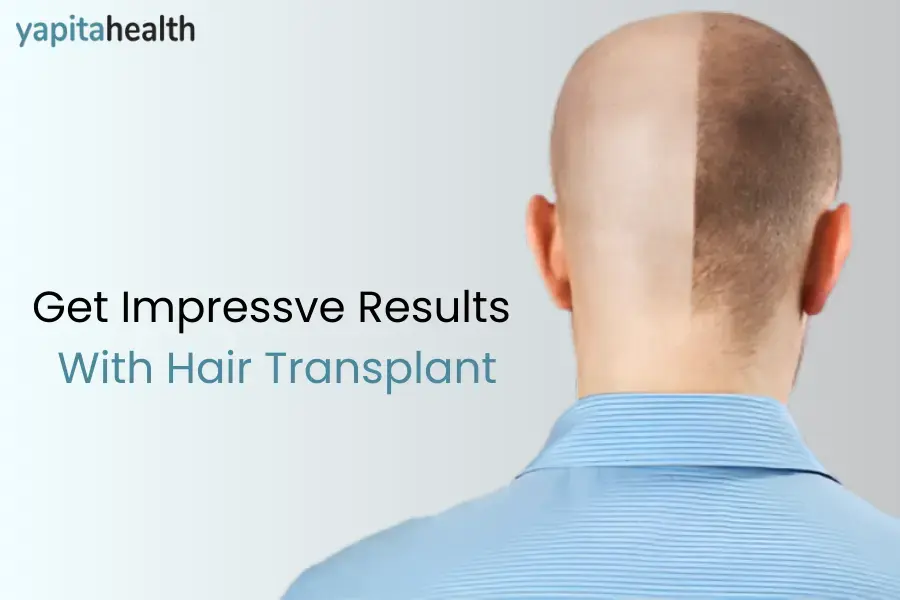
In this article, we will discuss the changes that can impart before and after hair transplant results. Hair loss significantly impacts an individual's self-confidence and overall well-being.